Dr. Soham Dinda, Consultant Orthopaedic and Trauma Surgeon in Tamluk, Purba Medinipur (MBBS Hons, NRSMCH; MS Orthopaedics, RG Kar MC&H), explains medicines, braces, plaster, exercise: symptoms, causes, tests and treatment options.
Surgery is not the first answer to every problem
A visit to an orthopaedic surgeon does not mean you will be operated on. In day-to-day practice, a large share of bone, joint, muscle and spine problems are managed with non-operative (conservative) treatment. Surgery is advised only when it is likely to help more than other options. The aim is to explain all choices clearly so that you and your family can decide.
Conditions often managed without surgery
- Early and moderate knee arthritis and other joint pain
- Back pain, sciatica and most disc problems
- Frozen shoulder and many rotator cuff problems
- Heel pain and plantar fasciitis
- Tennis elbow, wrist and tendon problems
- Many stable fractures that heal in plaster or splints
- Sprains, strains and mild ligament injuries
Tools of non-operative treatment
Medicines
Pain relievers, anti-inflammatory medicines, muscle relaxants and supplements such as calcium and vitamin D are prescribed at the right dose and for the right duration, with attention to your stomach, kidney, heart and other medicines.
Braces, supports and plaster
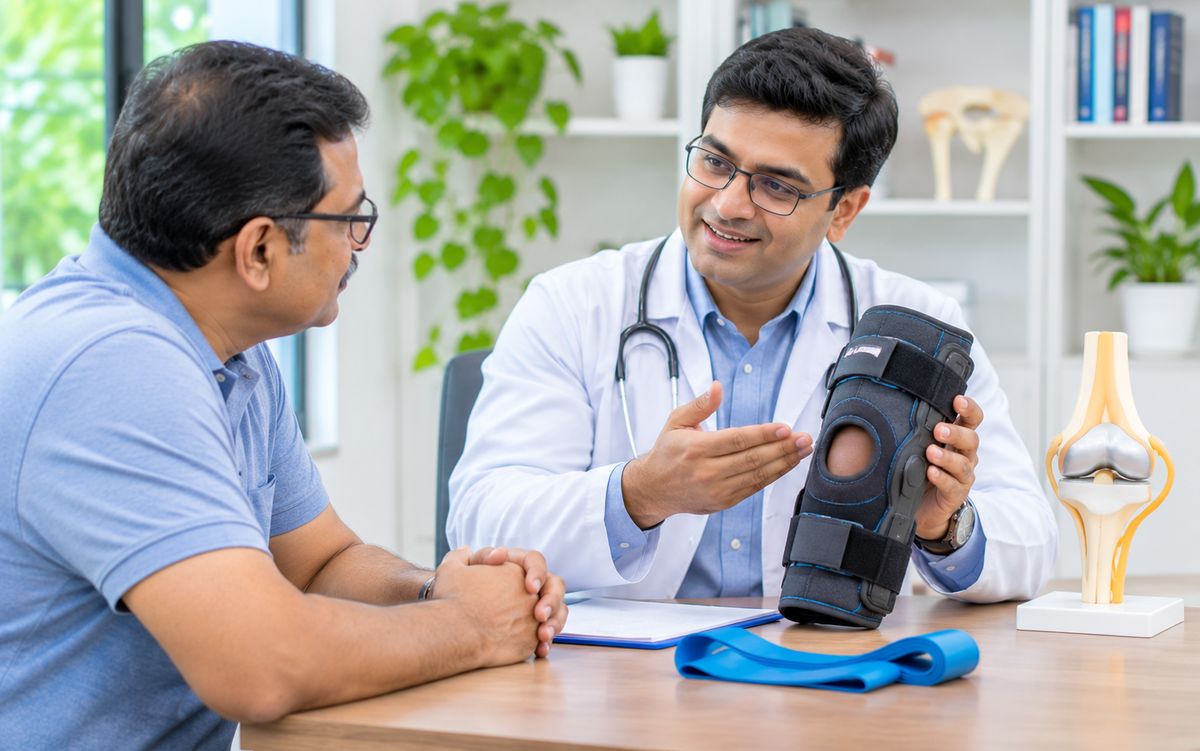
Knee braces, back belts, slings, splints and plaster casts rest and protect the injured part so that it can heal or settle. They should be used as advised and not for longer than needed, so that muscles do not weaken.
Exercise and physiotherapy advice
Strengthening and stretching exercises are central to recovery in the knee, back, shoulder and foot. You will be shown which exercises to do, how often, and which movements to avoid. A physiotherapist can supervise when needed.
Lifestyle changes
Weight reduction, correct posture, suitable footwear, changes at work or in the kitchen and regular activity reduce strain on bones and joints, and often make the biggest long-term difference.
Injections in selected cases
Joint or soft-tissue injections can help certain conditions when other methods have not given enough relief. They are chosen carefully and not used routinely.
Bone health and prevention
- Take calcium- and protein-rich food, and get morning sunlight
- Check vitamin D and bone density after 50, especially for women after menopause
- Do weight-bearing exercise like walking
- Make the house safe for older people: non-slip floors, grab bars, good lighting
- Avoid smoking and limit alcohol
When surgery becomes the better option
- Fractures that are displaced, unstable or open
- Severe arthritis causing constant pain and disability despite proper treatment
- Torn ligaments causing repeated giving way in active people
- Spinal nerve compression with progressive weakness or loss of bladder or bowel control
- Tendon tears and joint injuries that do not heal on their own
If you need surgery, Dr. Dinda will explain the procedure, risks, recovery and alternatives in plain language. See our pages on knee and hip replacement and arthroscopy.
Orthopaedic consultation in Tamluk
Dr. Soham Dinda is a Consultant Orthopaedic and Trauma Surgeon (MBBS Hons NRSMCH, MS Orthopaedics RG Kar MC&H) in Tamluk, Purba Medinipur. Patients from Haldia, Contai, Panskura, Kolaghat, Mecheda, Mahishadal, Nandakumar and Egra visit for bone and joint care.
সংক্ষেপে বাংলায়
হাড় ও জয়েন্টের অনেক সমস্যায় অপারেশনের দরকার হয় না। ওষুধ, ব্যায়াম, ব্রেস, প্লাস্টার, ওজন কমানো ও জীবনযাত্রার পরিবর্তনে বহু রোগী ভালো থাকেন। অপারেশন তখনই পরামর্শ দেওয়া হয় যখন সেটাই রোগীর জন্য সবচেয়ে ভালো। তমলুকে ডা. সোহম দিন্দার কাছে সব বিকল্প খোলাখুলি জেনে নিন। ফোন করুন ৮৯১০০৫১০৭২।
This page is for general awareness and does not replace a consultation. Please see a qualified doctor for diagnosis and treatment.